How Streaming Loudness Standards Quietly Ended the Loudness War
Spotify, Apple Music and Tidal now cap loudness automatically, forcing mastering engineers to abandon brickwall limiting that defined records for two decades.

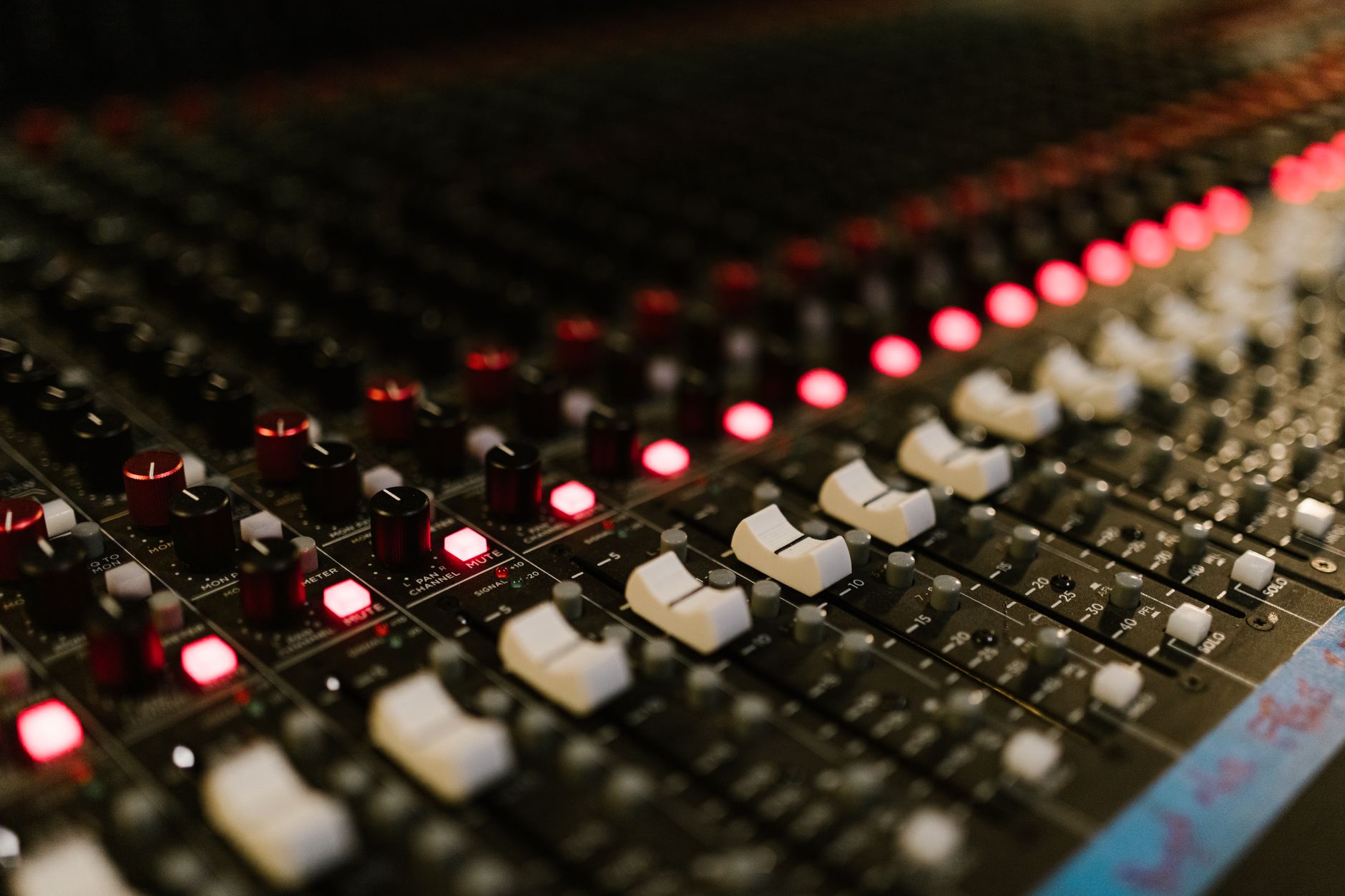
A mastering engineer finishes a record, pushes the limiter until the waveform looks like a solid brick on the screen, and ships a file that reads several decibels louder than anything else in the client’s catalog. For roughly two decades, starting in the 1990s, that was standard practice across pop, rock and hip hop. Then streaming platforms did something no mastering engineer could argue with: they turned the record back down automatically, before anyone heard it.
That is the mechanism behind loudness normalization, and it is why the loudness war, the decades-long arms race to make records louder than the next act’s, is effectively over. Spotify, YouTube Music, Tidal and SoundCloud all normalize audio to roughly -14 LUFS integrated loudness. Apple Music sits lower, at -16 LUFS, and Deezer targets -15 LUFS. If a mastering engineer delivers a file well above those thresholds, the platform simply turns it down on playback, and a heavily limited master ends up sounding smaller and less dynamic than a competitor’s more open mix at the same perceived volume.
The practical result is that the old competitive advantage of loudness has disappeared. A track mastered three decibels hotter than another no longer plays three decibels louder on Spotify. It plays at the same level, just with less dynamic range left to work with.
What the Loudness War Actually Cost Records
The loudness war took hold as CD mastering chains added brickwall limiters capable of squeezing a track’s dynamic range down to almost nothing while keeping the peak level maxed out. Metallica’s 2008 album “Death Magnetic” became the textbook example of the practice pushed to its limit: fans and audio engineers documented audible distortion and clipping on the CD release, and some listeners preferred the quieter, more dynamic mix bundled with the “Guitar Hero” video game version of the same songs. The controversy became a reference point in mastering forums for what over-limiting actually sounds like on playback systems.
Engineers were not necessarily choosing that sound. They were responding to A&R pressure and radio programmers who reportedly favored the loudest track in a stack, since listeners tend to perceive louder audio as better audio in short A/B comparisons, even when the material is more distorted.
How Platform Normalization Actually Works
Loudness normalization measures a track’s integrated loudness in LUFS, or Loudness Units Full Scale, a measurement standardized for broadcast before streaming services adopted it. If the delivered master sits above a platform’s target, playback volume is turned down to match; if it sits below, some platforms turn it up. Mastering engineers now typically deliver masters around -14 LUFS integrated with a true peak ceiling near -1 dBTP, a combination that avoids triggering heavy turn-down on Spotify, YouTube and Tidal while staying within Apple Music’s stricter codec headroom requirements for AAC encoding.
Bob Ludwig, the veteran mastering engineer behind records for Bruce Springsteen and Radiohead at Gateway Mastering, has been warning about this shift since normalization first appeared on streaming platforms. “With loudness normalized streaming taking over, bands will soon see that the louder you master the record, the more the algorithms the streaming services use will turn them down,” Ludwig said in an interview discussing the change. His point was structural: once every platform applies the same correction, competing on raw loudness stops being a lever anyone can pull.
Engineers Who Watched the War Actually End
Emily Lazar, whose mastering credits include records by Beck, Sia and Foo Fighters, has been blunter about how the old competition felt from inside a mastering suite. “The loudness wars are the bane of my daily existence,” she said. “If I could snap my fingers and make them go away, I would snap them so hard my fingers would fall off. I don’t like to have to compete because something’s a tenth of a dB louder than something else.” Her studio, along with several others at the top of the mastering field, built or adopted dedicated loudness-metering tools once normalization made LUFS compliance part of every delivery, rather than an afterthought.
Sterling Sound’s Chris Gehringer, another mastering engineer with a long major-label client list, has gone as far as developing his own loudness processing tool, released commercially as a plugin, reflecting how central LUFS management has become to a mastering engineer’s daily workflow rather than a one-off calculation done at the end of a session.
The Craft That Replaced Chasing Volume
With loudness no longer a competitive weapon, the actual work of mastering has shifted back toward dynamics, tonal balance and how a mix translates across playback systems, the priorities that dominated before the CD-era loudness race began. Engineers now have to think about a wider set of targets simultaneously: an integrated LUFS number for streaming, a true peak ceiling low enough to survive lossy encoding without inter-sample clipping, and a dynamic range that still sounds competitive next to other releases in a listener’s queue, since nothing in the algorithm rewards a flat, over-compressed master anymore.
This also changed what “translates well” means in practice. A master that sounds enormous cranked up in a mastering suite can sound thin and fatiguing once a platform pulls it down six or eight decibels to match its target. Engineers increasingly reference how a mix holds up specifically at -14 LUFS playback volume, not just at whatever level sounds most impressive on studio monitors during the session.
What This Means for Anyone Delivering a Master
For producers and independent artists submitting masters today, the practical guidance from working mastering engineers is consistent: deliver a well-balanced file around -14 LUFS integrated with true peak headroom around -1 to -2 dBTP, and stop treating loudness as a mixing goal. A dynamic master that breathes will now generally outperform a crushed one once every platform applies its own correction on top, because the crushed master loses detail it can never get back after the limiter, while the dynamic one still has that detail available when normalization brings it up or down to match everyone else.