Administration, Co-Publishing, and Where the Songwriter's Money Sits
A song's income splits into a writer's share and a publisher's share. What an administration deal does, what a co-publishing deal buys, and why registration and accurate splits decide whether anything arrives.

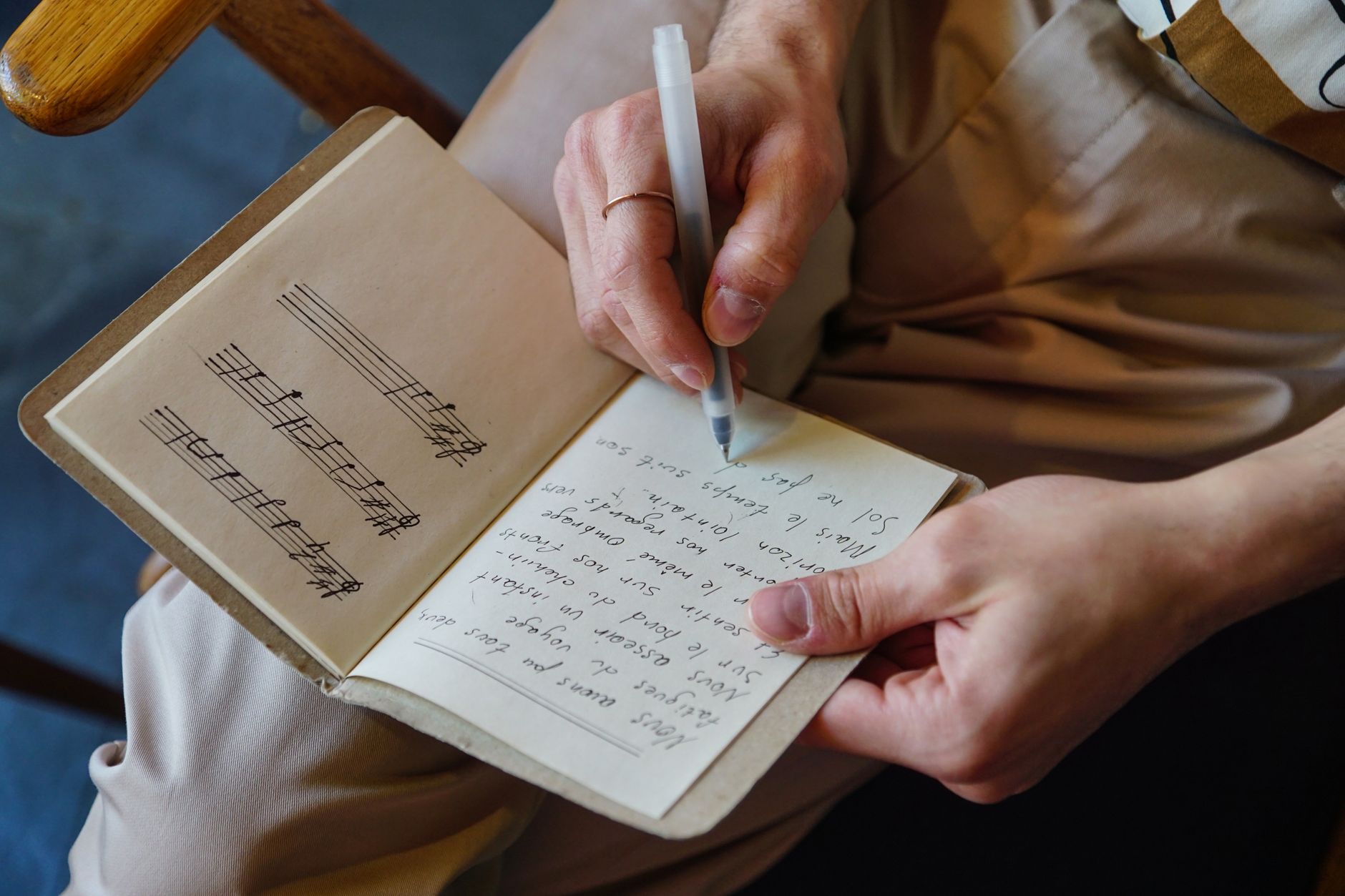
A songwriter with one earning song in the world has a filing problem before they have a money problem. The song is used in more places than any individual can observe, by licensees who have no idea who wrote it, in territories where nobody has heard the writer’s name. Somebody has to register the work, licence its uses, chase what is owed, and check that the number arriving is the number due.
That somebody is a publisher, and the arrangements under which publishers do this work differ from each other in one respect above all: whether the publisher ends up owning a piece of the song, or is simply paid to run it.
Two Shares, Not One Pot
A composition’s income divides into a writer’s share and a publisher’s share, conventionally described as two halves of a whole. This is not a description of who has been generous. It is the structural vocabulary the entire system uses, and every publishing arrangement is a statement about those two halves.
The writer’s share belongs to the writers, always. No standard arrangement takes it. The publisher’s share is the part that is available to be given away, retained, split, or sold, and it exists because publishing was historically work somebody had to be compensated for.
So when arrangements are compared, the question is never whether a writer keeps the writer’s share. It is what happens to the publisher’s share, and for how long.
The shares also travel differently, which is the second half of the answer to where a songwriter’s money sits. Public performance income customarily reaches the writer’s side directly from the collecting organisations, by a route that operates independently of the publishing deal. Most other publishing income — reproduction, synchronisation, print — is collected by or through the publisher and accounted onward to the writer under the terms of the agreement. So one stream tends to arrive whatever the deal says, and the rest arrives filtered through it.
What a Publisher Is Being Paid to Do
The functions are unglamorous and specific. Registering each work with the relevant societies and databases, in every territory where it might earn. Issuing licences and negotiating the ones that are negotiable. Collecting income from many sources and reconciling it against what the usage data implies. Accounting to the writer on a schedule. Auditing counterparties when the numbers look wrong.
Some publishers also do creative work: pitching songs for other artists to record, placing them into visual media, putting writers together in co-writing situations, and developing writers who do not yet have a catalogue.
Those two categories matter because they are the axis along which deals are built. Administrative functions are largely mechanical and can be priced as a service. Creative work is speculative, expensive, and impossible to price per unit — which is why the arrangements that include it tend to ask for ownership rather than a fee.
An Administration Deal Buys the Machinery
In an administration deal, the writer keeps ownership of the copyright and hires a publisher to operate it. The administrator registers the works, licenses uses, collects the income, accounts to the writer, and takes a fee expressed as a portion of what it collects.
Nothing changes hands but the work. The writer remains the owner and, subject to whatever the agreement says about licensing authority, retains the say over how the songs are used.
Administration deals run for a term, at the end of which the arrangement simply ends and the writer can go elsewhere. Some include a period after the term during which the administrator continues to collect on licences it issued while the deal was live, because a licence granted during the term generates income after it.
What an administration deal generally does not include is money up front, and it does not include somebody working to make the songs earn more than they already do. It is a service arrangement, and it suits a writer whose songs are already generating income that is going uncollected.
A Co-Publishing Deal Buys a Share of the Song
A co-publishing deal is an ownership transaction. The publisher acquires an interest in the copyright of the works covered, and in exchange provides money, effort, or both.
The interest acquired comes out of the publisher’s share. The writer keeps the writer’s share, and typically retains part of the publisher’s share too, which is why the writer is a co-publisher rather than a former owner. The publisher’s stake is durable in a way an administration fee is not: it is ownership, and unless the agreement provides for its return, it does not expire when the term does.
What the writer receives in exchange is usually an advance, plus the publisher’s active effort on the catalogue, plus whatever leverage a publisher’s existing relationships bring to placing songs.
The trade is legible once the two halves are clear. An administration deal rents out the machinery. A co-publishing deal sells part of the asset to fund and motivate the work being done on it.
The Advance Is Money Against Future Income
An advance in publishing is recoupable. The publisher pays it now and recovers it from the writer’s future income before further money flows through.
Which income streams the recoupment draws from is one of the more consequential details in any such arrangement, as is whether income from separate works or separate agreements can be pooled against a single unrecouped balance. Where it can, a successful song can spend years paying off a balance created by an unsuccessful one.
The practical effect is that a writer holding an advance may see nothing further for a long stretch, while the song is unmistakably earning. Nothing has gone wrong. The money is arriving and being applied to a balance.

What a Full Transfer of Copyright Means
The oldest arrangement in publishing is the simplest to describe: the writer assigns the entire copyright in the works to the publisher, permanently or for a long fixed period.
The publisher then owns the songs and controls them. It decides what gets licensed, what gets refused, and what gets sold on. It keeps the whole publisher’s share, because there is no longer another publisher to share it with.
The writer retains the writer’s share of income and the credit as author. Certain personal rights of authorship persist in some territories regardless of who owns the copyright. What is gone is control and the ability to participate in the asset’s future value.
Full transfers still occur, and where they do the compensation is expected to reflect what is being handed over, because what is being handed over is the song.
Registration and Splits Are Where the Money Is Won or Lost
The commercial terms determine how income is divided. Registration determines whether there is any income to divide.
A work that is not registered where it earns is not owed to anybody in particular, and the systems that pay do not go looking. Under an administration or co-publishing arrangement this is the publisher’s job — one of the main things a writer is paying for — but it depends on information only the writers have: who wrote what, in what proportion, affiliated where, publishing through whom.
Splits also have to agree everywhere they are filed. Where two parties file inconsistent claims on the same work, the usual outcome is that income is held rather than paid, sometimes for a very long time, and the resolution is an administrative negotiation rather than an adjudication. A dispute about a share is therefore not a dispute about a share of money flowing; it is a decision to stop the flow entirely until it is settled.
Sub-Publishers Handle Other Territories
Publishing rights are territorial, and a publisher in one country has no direct presence in most others. So the standard structure is a network of sub-publishing arrangements.
A sub-publisher takes on the works for a defined territory. It registers them locally, licenses them locally, collects locally, retains an agreed portion of what it collects, and remits the rest to the original publisher, which accounts onward to the writer.
Two details govern how much survives that journey. One is how many hands the money passes through, since each one retains something. The other is the accounting basis: whether the writer’s percentage is calculated on the gross collected in the foreign territory, or on the reduced amount that reaches the home publisher after the sub-publisher has taken its portion. The same stated percentage produces different money depending on which of the two applies.
Foreign income is also slower, because it has to be collected locally, remitted, then accounted through at least one further set of books.
Why Unclaimed Royalties Accumulate
Money is collected for uses of works that cannot be matched to an owner, and it accumulates.
The causes are mundane. A work was never registered. It was registered in one territory and not another. Titles or writer names do not match across databases. Splits conflict, so nothing can be paid. A writer changed affiliation and the paperwork did not follow. Nobody has claimed it because nobody knows there is anything to claim.
What happens to that money varies by system, and the mechanisms include holding it for a claim period and, in some cases, eventually distributing it by proxy according to the shares of known and identified repertoire. The consequence of a proxy distribution is worth understanding plainly: it moves money towards catalogues that are well registered and well represented, and away from the ones that are not. Being hard to identify is not a neutral condition.
This is the least glamorous part of publishing and the part with the clearest relationship to whether a writer is paid.
A Reversion Clause Sends the Song Home
Ownership acquired in a co-publishing or transfer arrangement does not expire on its own. A reversion clause is the mechanism by which it can.
Reversion provisions are structured around triggers. Some return the rights after a defined period following the end of the term. Some tie the return to recoupment, so the interest reverts once the advance has been recovered. Some make it conditional on performance, returning works the publisher did not exploit while keeping the ones it did.
Their significance comes from the earning life of a composition. Songs earn across decades and through recordings that do not exist yet, so an interest granted early can outlast every relationship and every career phase involved in granting it. A reversion clause is the difference between a temporary arrangement and a permanent one.
Reading Any of These as a Trade
Stripped of vocabulary, the arrangements sit on one axis. At one end, the writer keeps the asset and pays for the machinery. At the other, the writer sells the asset outright. Co-publishing sits between the two, exchanging some ownership for money now and effort applied later.
None of the three is a better structure than the others in the abstract. They answer different questions: whether a writer needs capital, whether the catalogue is already earning enough that mere collection is the whole opportunity, and whether there is work to be done that only somebody with a stake will do.
What does not vary is the part underneath all of it. The registrations have to be complete, the splits have to be documented and consistent, and the accounting has to be checked. A generous arrangement on unregistered works pays nothing at all, and a narrow one on properly registered works still pays.