Monitor World: The Mix Nobody in the Audience Hears
Performers hear a completely different show, built for them by a second engineer on a second console. How wedges and in-ears change a performance, and why a monitor fault stops a set faster than anything out front.

A singer stops mid-verse, turns away from the crowd, and taps their ear while pointing at nobody in particular. The audience reads it as a moment of drama, or a hiccup somewhere in the building. It is neither. It is a message to a person at a console at the edge of the stage, out of sight, whose entire job is a set of mixes the audience will never hear a second of.
That is monitor world, a parallel production running underneath the show. Front of house builds what the room hears, which is a separate craft with separate problems. Monitors build what the people making the music hear, and if that fails there is no show to mix.
The peculiar thing about the discipline is that its output is invisible by design. Nobody in the seats can evaluate it or notice when it is excellent. They detect it only by its absence, in a performance that comes apart for no reason they can identify.
The Second Console, at the Edge of the Stage
There are two mixing positions at a large show, and they are not doing versions of the same task.
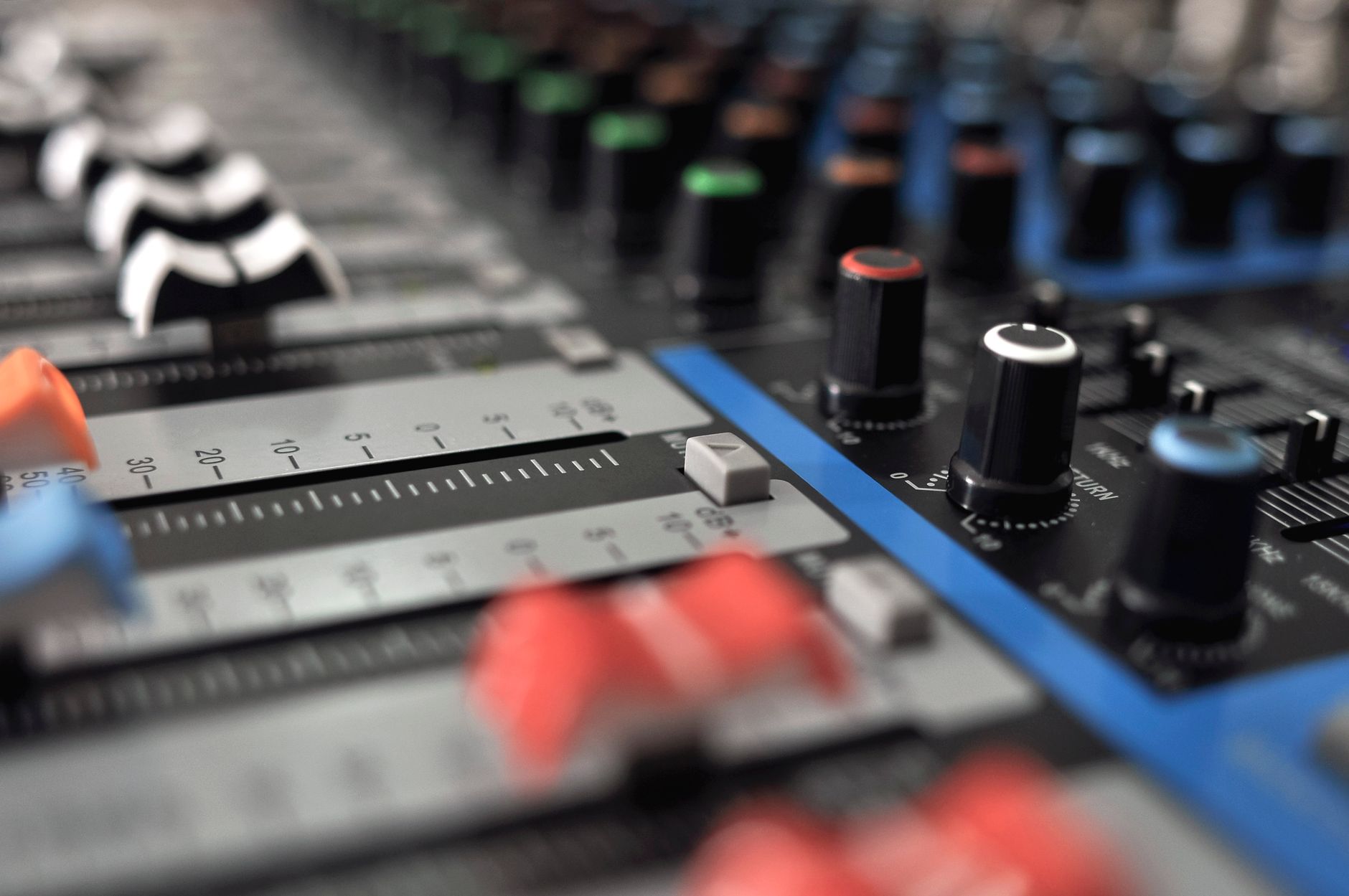
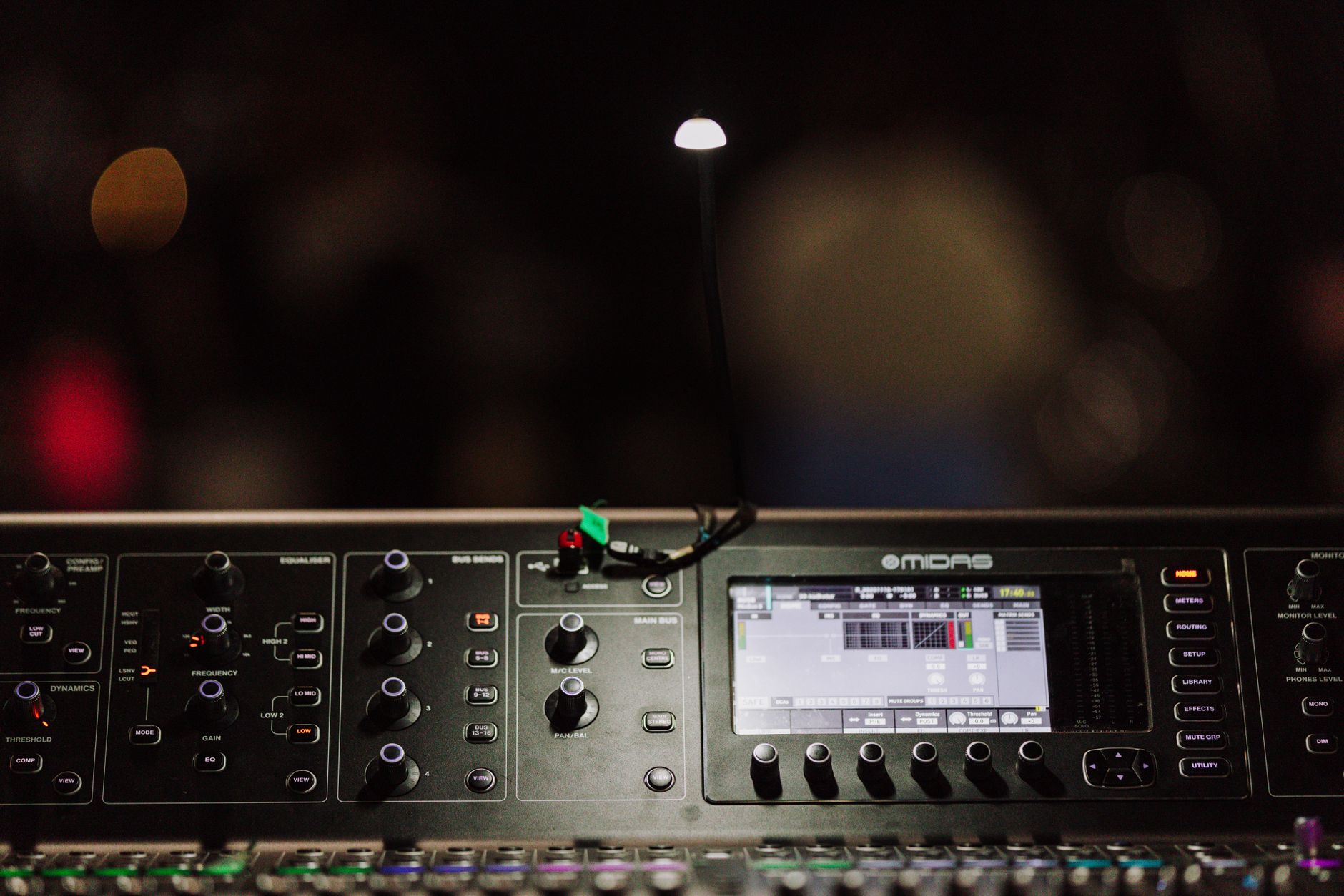
The monitor console sits at the side of the stage, often just past the wing, close enough that the engineer can see faces and read hands. That placement is not convenience. It is the whole working method. A monitor engineer needs line of sight to every performer, because the entire feedback loop of the job is visual: a raised finger, a hand cupped behind an ear, a glance, a shake of the head. Requests arrive during songs, in a fraction of a second, without words, and they have to be understood and executed before the next phrase.
The console receives the same inputs as the one out in the room. Every microphone, every instrument feed, every playback channel splits at the stage and travels to both positions. From that shared pool, one engineer builds a single mix for the whole room, and the other builds many mixes for a handful of people.
The monitor engineer also owns responsibilities nobody out front thinks about: ringing and feedback on stage, whether the drummer can hear a cue, whether the wireless links carrying audio to the performers are behaving, whether a guest walking on for one song has anything to hear at all.
The relationship with the band is different in kind, too. A front-of-house engineer serves an audience. A monitor engineer serves the performers directly, learns their preferences over long stretches of touring, and ends up somewhere between a technician and a member of the band. That is why monitor engineers are often the crew who stay longest with an artist.
Wedges and In-Ears Ask Different Things of a Performer
Two broad approaches exist for getting sound to a performer, and the choice between them changes the performance itself, not just the technical picture.
What a Wedge Puts in the Room
The angled cabinets on the floor pointing up at the performers are wedges, and they work by putting sound into the air the performer is already standing in.
That has a real advantage. The performer hears their monitor mix and the room and the band and the audience, mixed acoustically by physics rather than by an engineer. It feels like playing music in a place, because nothing was removed and nothing has to be added back. Some players refuse to work any other way.
The costs are structural. A loudspeaker aimed at a performer standing behind a live microphone is the classic feedback condition, so gain is capped by how much the system delivers before it rings, and the microphone chosen for the vocal matters enormously because its pattern determines how much of the wedge it rejects. Everything on stage leaks into everything else, so the stage becomes loud and sprays uncontrolled sound into the room. Levels creep upward all evening, because each performer’s answer to not hearing themselves is more of themselves, which buries someone else, who then asks for more. And the mix is correct in one spot only.
What an In-Ear Takes Away
In-ear monitoring replaces the wedge with moulded earpieces fed from a wireless receiver on the performer’s body. The earpieces seal the ear canal, so what the performer hears is close to only what the engineer sends them.
Everything the wedge struggled with improves at once. Gain is no longer limited by feedback, because no loudspeaker is aimed at a microphone. The mix is consistent regardless of where the performer stands. Isolation from stage volume protects hearing across a long touring life, which is no small thing in a profession where the damage is cumulative and permanent. And the stage gets quiet, which gives the room a cleaner starting point.
But sealing the ear canal removes the room, the audience, and the physical sensation of playing in a space, all of which were carrying information the performer relied on. It also removes the forgiveness of a blurry acoustic mix. In-ears are unsparingly detailed, and a performer suddenly hears their own timing and intonation with a clarity they may never have experienced. Some find that immediately liberating. Others find it deeply uncomfortable for weeks, and a few never make peace with it.
The failure mode differs too. When a wedge cuts out, the performer still hears the stage. When an ear feed cuts out, a performer can be left in near silence in front of a crowd, or hit with a sudden noise directly against the eardrum. That asymmetry is why redundancy and limiting matter more here than almost anywhere else in a live rig.
Every Player on Stage Hears a Different Show
The single most counterintuitive fact about monitors is that there is no monitor mix. There are as many as there are performers, and they have almost nothing in common with each other.
A drummer needs a timing reference above everything else, which usually means bass, whatever carries the pulse, and enough of their own kit to place their limbs. A bass player needs the drums, particularly the kick, because their job is to lock to it. A guitarist typically wants less of their own instrument than anyone expects and more of the vocal, because the vocal tells them where in the song everyone is. A keyboard player covering several parts needs to hear their own hands with precision. A singer needs their own voice, clear and forward, plus a harmonic reference to pitch against, and often very little else.
Nobody wants a balanced mix. A balanced mix is what the audience gets. A performer wants a deliberately distorted picture of the show that makes their specific job possible, and one player’s ideal mix would be unusable to the person standing next to them.
Requests are also relative rather than absolute, which is the part that takes experience to handle. A player asking for more of themselves is describing a ratio, and the engineer often serves that request better by reducing whatever is masking them than by raising what was asked for. Raising things all night ends with every mix at the ceiling and no headroom left for the moment it is genuinely needed.

Pitch, Time, and What Isolation Does to Both
Changing how a performer hears themselves changes what they play. This is the part of monitoring that is not a technical matter at all.
The Singer’s Reference
Singing in tune is a closed loop. A singer produces a note, hears it, compares it against a reference, and corrects continuously. Interfere anywhere in that loop and intonation moves.
Under wedges, a singer hears their own voice through the air and through the bones of their own skull, blended with a room that adds reverberation. Reverberation is flattering, and it also obscures small errors. Take it away and every deviation is exposed. Singers frequently pitch more accurately on in-ears once adjusted, because the reference is cleaner, and pitch worse in the first days, because the honesty is unsettling and they push against it.
The seal itself is the other variable. A blocked ear canal raises the relative loudness of the singer’s own body-conducted voice, which makes them feel louder than they are, so they tend to sing more quietly than they intend. This is why a small amount of a singer’s own voice, treated carefully, and often a touch of reverberation added into the ear mix, is not decoration. It restores a reference the sealed ear removed.
A drummer’s version of the same problem is about time rather than pitch. Wedges and a loud stage give a drummer a slightly delayed, smeared version of the band, and they compensate for it without knowing they are. Isolate them and the compensation becomes an error. Drummers also lose the physical coupling to their own kit at volume, so a mix that reads as correct in a quiet room can leave them feeling weightless behind it. Both are adjustment problems, solved in rehearsal rather than on the night.
Click Tracks and Cue Feeds
Once performers are on isolated ear mixes, a whole layer of production becomes possible that a wedge stage cannot support.
A click track is a metronome pulse sent into the ear mixes so the band holds a fixed tempo. It exists because anything synchronised to the performance needs one: lighting cues, video content, timecoded effects, playback of parts nobody on stage is playing. The cost is that the band no longer breathes with the room. Tempo becomes a decision made in advance rather than a response to an audience, and shows built this way trade spontaneity for the ability to run a large synchronised production at all. Which is why some performers accept a click for exactly the songs that need it and play the rest free.
Cue feeds are the same channel used for communication. A talkback microphone lets the monitor engineer speak directly into a performer’s ears. A stage manager can count in a change. A musical director can call an audible. Where a show has structural flexibility, this is how a decision to extend a section or drop a song gets communicated without the audience seeing anything happen. The ear mix is, among other things, the show’s private intercom.
Putting the Room Back Into a Sealed Ear
Isolation solves the technical problems and creates an emotional one. A performer on well-sealed in-ears can play to a large crowd and hear almost nothing of it, which makes a full room feel like a rehearsal and starves them of the response they perform against.
The fix is to add the room back deliberately. Ambient microphones are placed to capture the audience and the space, aimed away from the loudspeaker system so they pick up crowd rather than a delayed copy of the mix, and folded into the ear mixes at a level the performer chooses. Between songs they carry applause, which is the part performers notice they were missing. During songs they carry a sense of enclosure that keeps the mix from feeling like headphones.
Getting it right is a balancing act. Too little and the performer is isolated. Too much and the ambient channels drag stage leakage and room reflection into an otherwise clean mix, undoing the reason for using in-ears at all.
Some performers prefer a hybrid: in-ears for isolation, with low-frequency energy delivered physically so they feel the low end in their body while hearing detail in their ears. Feeling and hearing are not the same sense, and rhythm sections have always used both.
Line Check, Soundcheck, and Why a Monitor Fault Stops a Show
Two things happen before a performance that are routinely confused with each other, and only one of them involves the band.
What a Line Check Confirms
A line check verifies that every signal path works, done by crew without performers present. Someone moves through the inputs one at a time, striking each drum, speaking into each vocal microphone, playing each instrument feed, confirming the signal arrives at both consoles on the channel it should and that nothing is noisy, intermittent, or silent.
It is not a musical exercise. It exists because a fault found here is a repair with time to make it, while the same fault found later happens in front of an audience.
Soundcheck is the musical pass that follows. For monitor purposes it is where each performer’s mix gets built and confirmed on this stage, in this configuration, with these positions, and where the results are stored so a mix can be recalled rather than rebuilt.
Monitors get priority in that process for reasons of consequence. A problem in the room is unpleasant. Something is muddy, or a solo is buried, or a section of the bowl gets a harsher mix than it should, and the show continues while the engineer works on it. Most of the audience never knows.
A problem on stage stops the music. A singer who cannot hear a pitch reference cannot sing. A drummer who loses the click loses the tempo, and anything synchronised to it falls apart with them. A band that cannot hear each other cannot stay together, and the failure is immediate and total rather than gradual. So a monitor fault gets fixed first, always, and if it cannot be fixed quickly the show waits.
Which is the whole logic of the discipline. It is a production the audience is never meant to perceive, run for a handful of people, and its success is measured entirely in the fact that a band can stand in a hostile acoustic environment and play as though they were in a room built for it.