Inside the Analog Synth Revival Reshaping Electronic Music Studios
Expired patents let Behringer sell a three hundred dollar Minimoog clone next to Moog's four thousand dollar original, and producers are buying both.

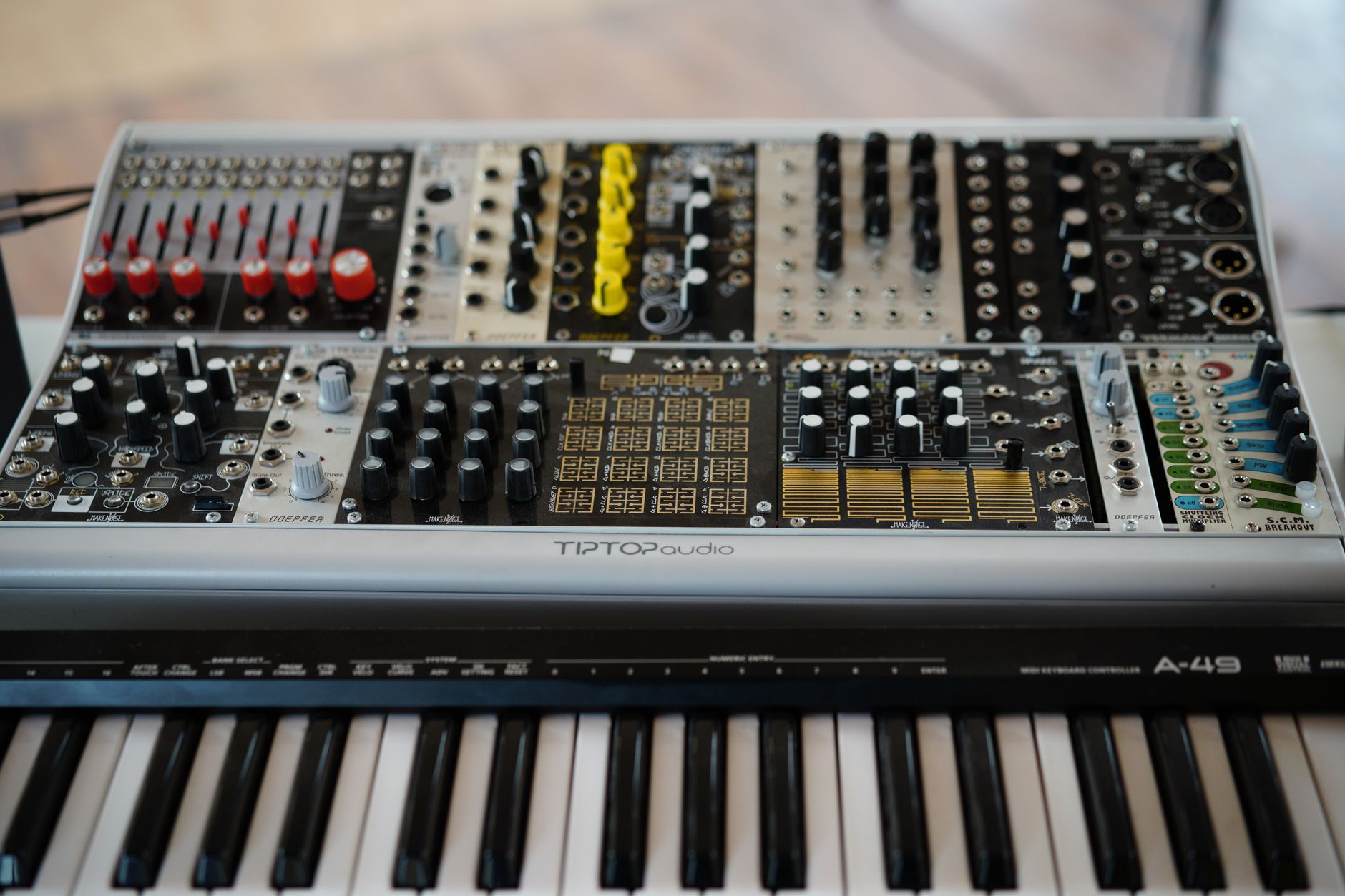
A producer building a modular rig today can buy a Behringer Model D, a close copy of the original Minimoog Model D circuit, for around $300. Or they can buy Moog’s own Bob Moog Tribute Edition Minimoog, hand-built in the company’s Asheville, North Carolina factory, for $3,999. Both instruments trace their circuitry back to the same 1970 design. The thirteen-fold price gap between them is the clearest window into why hardware synthesizers, long assumed to be a dead format after decades of software plugins, are back at the center of electronic music production.
The short explanation is that the patents protecting those original circuits have expired, and two very different manufacturing philosophies have moved into the space that opened up.
Why Clones Became Legal to Build
Behringer has built its recent catalog around meticulously recreating classic synth circuits once the original patents lapse, arguing that once a design enters the public domain, reverse-engineering and reproducing it is legitimate. The company has not always avoided controversy doing this. In 2018, Behringer sued Dave Smith Instruments and roughly twenty individual users of the Gearslutz forum for a combined quarter of a million dollars over comments made about its cloning practices, a dispute that became a flashpoint in the synth community over how openly manufacturers could discuss reverse-engineering. Notably, Moog itself has never taken legal action against Behringer over the Model D or its other clones, despite how closely they follow Moog’s original circuit designs, a restraint widely read in the industry as an acknowledgment that the underlying patents are no longer enforceable.
That legal opening is why Behringer’s Eurorack-format clones of classic Moog modules, in production since 2020, could exist at all, and why they undercut original Moog pricing by a factor of ten or more while including modern additions like MIDI I/O and USB connectivity that the 1970s originals never had.
What the Original Manufacturers Are Selling Instead
Moog and Korg have responded to the clone market not by competing on price, but by leaning further into the collector and studio-flagship end of the market. Moog revived the Model 10, Bob Moog’s own first compact modular synthesizer, as a hand-built reissue retailing at $11,999 for the synthesizer alone, with the matching 953 duophonic keyboard sold separately for $1,499. Korg went further still, reissuing the ultra-rare PS-3300, an analog polysynth originally built in tiny numbers between 1977 and 1981 by Korg engineer Fumio Mieda, as a full-size, made-to-order unit priced at roughly $13,000.
Neither instrument is aimed at a producer looking for an affordable way into analog sound. Both are aimed at studios and collectors who want the specific instrument, built the specific way it was originally built, with the scarcity of the original intact.
The Eurorack Format Made the Clones Modular
Behringer’s decision to release most of its Moog-derived clones in Eurorack format, rather than as standalone keyboard synthesizers, matters as much as the price. Eurorack is a modular standard where individual circuit functions, an oscillator, a filter, an envelope, ship as separate small panels that a producer wires together with patch cables in whatever configuration a track needs. Selling a Minimoog’s oscillator and filter as separate $150 to $200 Eurorack modules, rather than as one fixed $300 synthesizer, let Behringer’s clones slot directly into the modular systems that a large share of serious electronic producers were already building around Eurorack gear from other manufacturers, rather than asking anyone to choose between a modular rig and a vintage-style synth.
What Producers Are Actually Buying
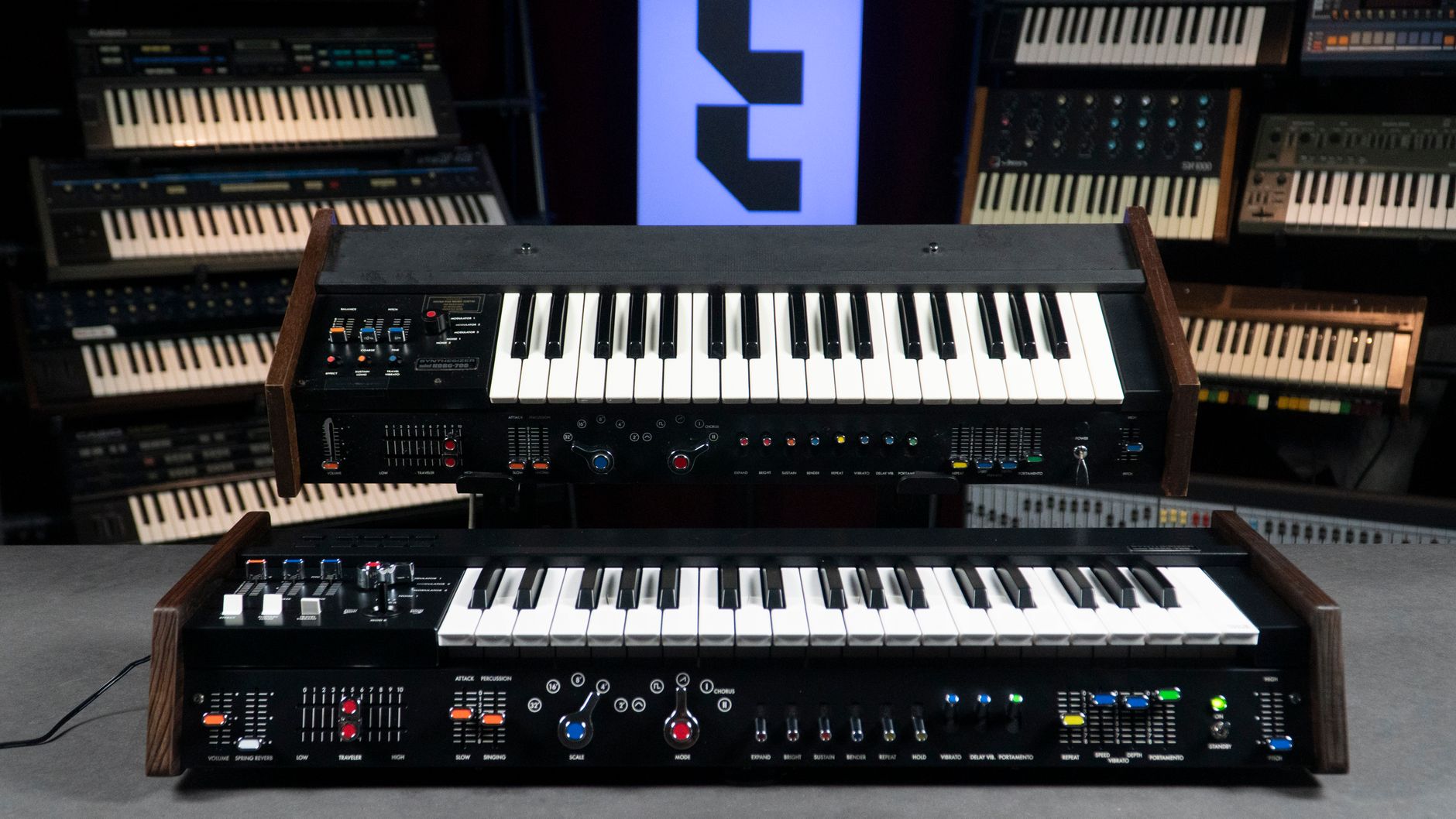
The split in the market maps fairly directly onto what a given producer needs. A touring or bedroom electronic producer who wants the Minimoog’s specific filter and oscillator behavior, without the risk of gigging with a fifty-year-old original, buys the Behringer clone, gets comprehensive MIDI implementation and CV/Gate connectivity built for modern integration, and spends the difference on the rest of a modular rig. A studio or collector chasing the exact sound and provenance of the original instrument, often for a specific record or a specific artist’s known setup, buys the reissue or hunts a vintage unit through dealers and auctions.
Both paths point back to the same underlying shift: producers who grew up entirely inside software plugins are actively seeking out physical hardware again, whether that means a $300 Eurorack module or an $11,999 hand-built reissue, because the tactile, imperfect behavior of analog circuitry has become a selling point rather than a limitation to be modeled around in a plugin.
Why This Counts as a Genuine Revival, Not Nostalgia
What separates the current moment from ordinary retro cycling is that both ends of the price range are simultaneously in production and both are selling. A market where only expensive reissues existed would be a niche collector story. A market where only budget clones existed would be a cost-driven trend with no real cultural weight behind it. Having Moog build a $13,000-adjacent flagship reissue at the same moment Behringer sells a functionally similar circuit for a tenth of the price is evidence that demand for analog hardware runs across the entire spectrum of electronic music producers, not just the ones who can afford a vintage original.
What to Actually Buy at Each Budget
For a producer deciding where to start, the practical guidance from the current market is straightforward: Behringer’s clone line covers the classic Moog, Roland and ARP circuits at prices that make experimenting with analog signal paths realistic for anyone, while Moog’s and Korg’s reissues exist for players who already know exactly which historical instrument they are chasing and are willing to pay for the specific manufacturing pedigree that comes with the original name on the panel.