What AI Voice Cloning Actually Threatens in Music Rights
Composition copyright, recording copyright and rights in a person's voice are three different things. Why a synthetic vocal that copies no recording falls between them.

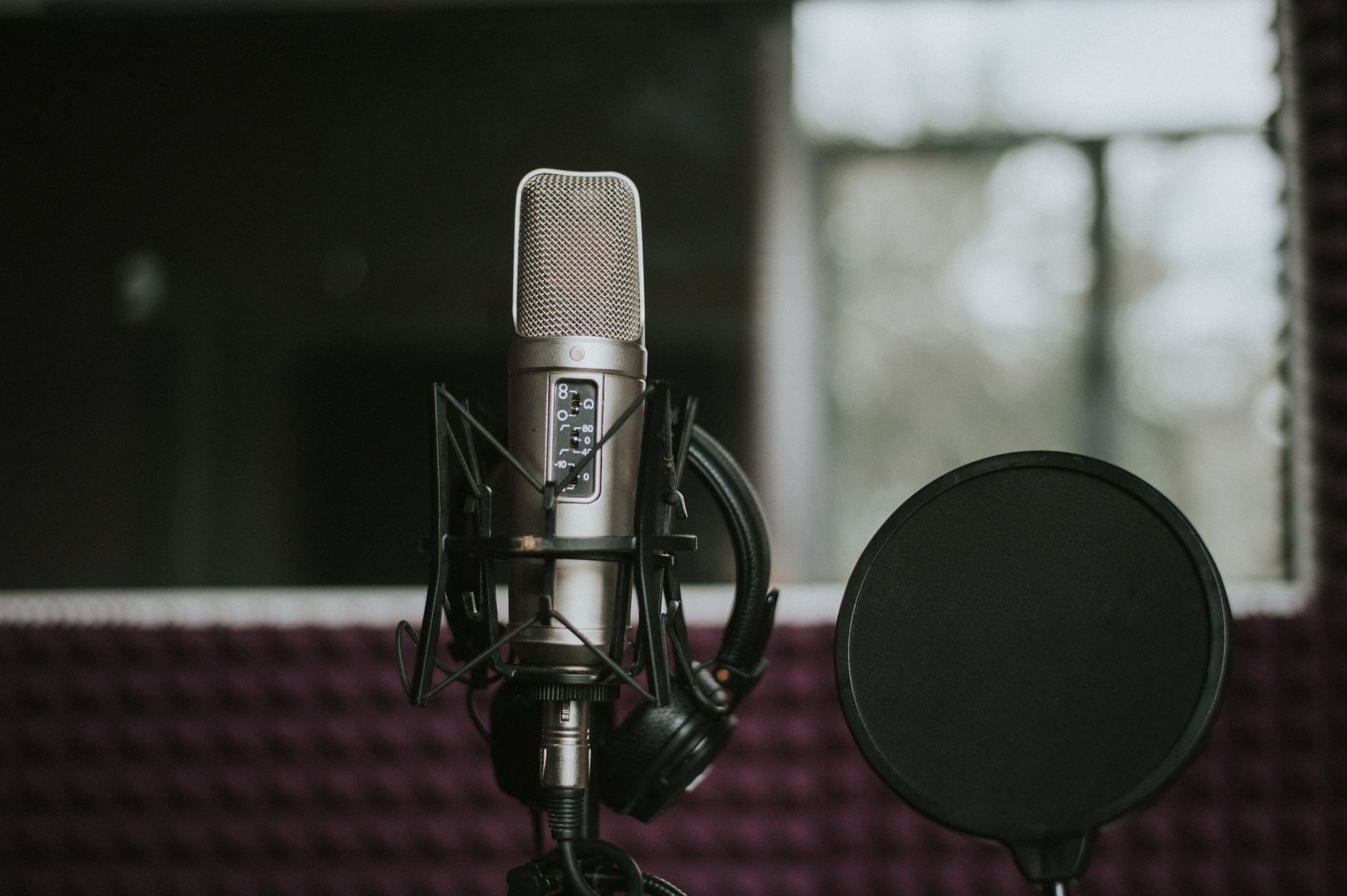
Synthetic voice models did not create a new legal question so much as expose an old assumption. Music rights were built around two things that can be written down and compared: a composition, and a recording of it. A convincing imitation of how a particular person sounds is neither of those, and the frameworks were never designed to catch it.
That gap is the whole issue, and it is worth separating from the noise around it. The interesting problem is not that a machine can produce a passable vocal. It is that the resulting output can be simultaneously an obvious appropriation of someone’s identity and a poor fit for the legal categories the industry uses to protect its assets.
Three Different Things People Call Ownership
Almost every confused argument about synthetic vocals comes from collapsing three distinct rights into one.
The first is copyright in the composition: the melody, lyrics, and structure of a song as a written work. It protects the song regardless of who performs it, which is why a cover version requires permission from the composition side.
The second is copyright in the sound recording, sometimes called the master. It protects one particular fixed performance, as captured. It is why sampling a recording requires clearance even when the underlying song has been licensed, and it is a right in that specific audio, not in the style it exhibits.
The third is not copyright at all. Rights in a person’s name, voice, image, and likeness protect identity rather than a creative work. They sit in a different body of law, they vary considerably between jurisdictions, and they are concerned with unauthorised commercial use of who somebody is. Copyright asks whether a work was copied. Identity rights ask whether a person was appropriated. These are separate questions with separate answers, and a single synthetic recording can trigger one and not the other.
A Synthetic Vocal Can Copy Nothing and Still Take Everything
Consider the awkward case, which is also the ordinary case. A newly written song, performed by a model trained to reproduce the vocal characteristics of a well-known singer, in a recording that contains no audio lifted from any existing release.
Run that through the first framework. The composition is new, so there is no infringement of any existing song. Run it through the second. No existing recording has been reproduced; the output is freshly generated audio, so the classic sampling analysis has nothing to grip. Yet any listener would identify the singer immediately, and the entire commercial value of the thing rests on that identification.
This is why the argument keeps sliding away from copyright. Copyright protects expression that has been fixed, not the timbre of a larynx or the habits of a phraser. Style has never been protectable, for good reasons: if it were, ordinary influence would become infringement and music would stop functioning. A synthetic vocal exploits exactly that boundary. It takes what copyright deliberately leaves free, and it takes it with a precision the boundary was never designed to withstand.
The consequence is that the strongest objections tend to be framed in terms of identity, false endorsement, and consumer confusion rather than copying, because those frameworks are about the person and the impression created rather than about the work.
Voice and Likeness Sit Outside Copyright Entirely
Identity rights are older than the technology and were built for a different kind of imitation, but the structure transfers.
The general principle is that a person’s identifiable attributes should not be exploited commercially without permission, particularly where the use implies involvement or endorsement. Applied to a synthetic vocal, that raises a set of questions copyright never asks: is the person identifiable from the output, is the use commercial, would an ordinary listener believe the person participated, and was any disclosure made.
Two structural features make this untidy. First, these rights differ substantially between jurisdictions in scope, in whether they survive death, and in how they interact with expression that is satirical or commentary. A distribution that is instantly global runs into all of those variations at once. Second, the rights usually belong to the person rather than to a label, which means the party with the legal standing to object may not be the party with the resources or contractual interest to act. A recording contract assigns rights in recordings; it does not straightforwardly assign a voice.
The Training Question, Left Open
Separately from the output sits the question of the input, and it is genuinely unsettled rather than merely contested.
To build a model that reproduces a particular voice, that voice has to be learned from recordings of it. Those recordings are protected works. Whether using them as training material requires permission is an open question, and the arguments on each side are coherent.
One position holds that ingesting a work to derive statistical patterns is a use of the work, that it is commercial when the resulting model is commercial, and that permission and payment should therefore be required, particularly where the model is designed to reproduce one identifiable performer.
The other holds that learning general characteristics from material is closer to analysis than to copying, that the output contains no reproduced portion of any input, and that treating pattern extraction as infringement would make routine study of existing work legally hazardous.
Both positions are being tested, and different jurisdictions are approaching them differently. The honest description is that the training question is unresolved, and that anyone stating a settled answer is describing a preference. What is clear is the practical asymmetry: training data is the least visible part of the chain, and the party best placed to know what a model consumed is the party least incentivised to disclose it.
Consent, Credit, and the Takedown Problem
While the doctrine remains unsettled, the operational consequences are already concrete, and they cluster around three things.
Consent has to become explicit and specific. If a voice can be modelled, then permission to use it needs the same treatment a sync licence gets: which uses, which territories, for how long, with what approvals, and whether the grant can be sublicensed. Blanket permission to use somebody’s voice is a far larger concession than it appears, because it is permission to generate performances that person never gave, indefinitely, and consent obtained on old paperwork drafted for recording sessions does not plausibly cover it.
Credit and disclosure become questions of accuracy rather than courtesy. Where a synthetic performance is presented without any indication of what it is, listeners are being misled about who performed, and every downstream system, playlists, credits, rights registration, is populated with a false claim that is difficult to correct later.
Enforcement is the hardest of the three. Existing takedown mechanisms are built around copyright: a rights holder identifies a protected work being used without permission, and the process follows from that. A synthetic vocal that infringes no work does not fit the form. Complaints have to be routed through identity or misrepresentation claims, which are less automated, more jurisdictionally specific, and much slower than the volume of material requires. Meanwhile detection is unreliable in both directions, producing both missed cases and wrongly flagged genuine recordings, and the burden of proving a performance authentic falls on the performer.
What Is Actually at Stake
The threat is not that synthetic vocals sound convincing. It is that the industry’s protective machinery is aimed at works while the thing being taken is a person, and those are governed by different rules with different reach. Until the training question settles, the workable protections are contractual and procedural rather than doctrinal: consent written specifically enough to mean something, disclosure treated as a factual requirement, and documentation good enough to prove what a real performance was. That is a thinner defence than copyright, and for the moment it is the one that fits the problem.