How Performing Rights Organisations Collect the Money Nobody Sees
Blanket licences, sampled usage data and reciprocal agreements explain how public performance money reaches songwriters, and why unregistered works and unreported setlists get nothing.

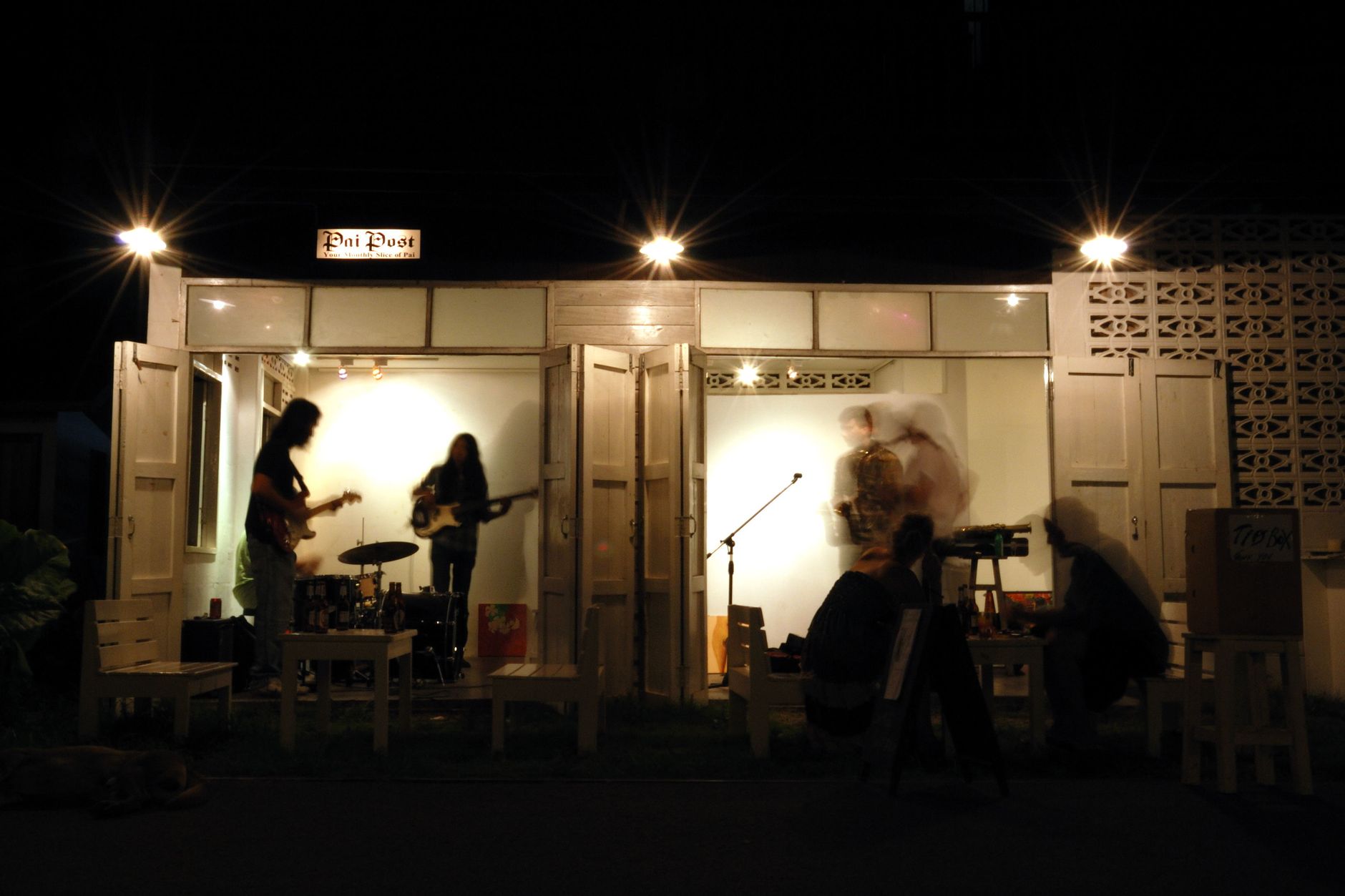
Most of the money a songwriter earns from music being played in public arrives without either the writer or the listener noticing the transaction. A song plays in a bar. Nobody scans anything, nobody signs anything, and yet a licence is in force and a payment obligation exists. The organisations that make that work are performing rights organisations, and they exist because the alternative is unworkable.
The problem they solve is not collection so much as transaction cost. Music is used publicly millions of times a day by businesses with no music expertise, and the rights involved are owned by an enormous, shifting population of writers and publishers. No individual negotiation could scale to that, in either direction.
What Counts as a Public Performance
The right at issue is a distinct one. Copyright in a composition includes the exclusive right to perform that work publicly, separate from the right to copy it or distribute it. Performing a song in public without permission engages that right regardless of whether anyone paid to hear it.
Public is broader than most people assume. It covers performance outside a normal family or social circle, so it includes far more than ticketed concerts: recorded music played in a shop, a restaurant, a gym, or a hotel lobby, music transmitted by a radio or television broadcaster, music on hold on a telephone system, music in a fitness class, and live performance in a venue of any size. The person or business responsible for the performance is generally the licensee, which is why the licence sits with the venue, the broadcaster, or the operator rather than with the musician or the customer.
Note what this right is not. It attaches to the composition and belongs to writers and publishers. The separate question of rights in the sound recording is handled through different arrangements that vary considerably by territory. A single background track playing in a café can therefore involve two distinct sets of rights and, in many countries, two different licences.
The Blanket Licence Solves an Impossible Transaction
A café playing music through the afternoon has no way of knowing in advance which songs will play, who wrote them, or who controls the publishing. A writer has no way of finding out that a café in another country played their song and no practical means of invoicing it.
The blanket licence resolves both problems at once. A performing rights organisation aggregates the public performance rights of a large body of writers and publishers, then offers users a single licence covering that entire repertoire for a period, usually a year. The licensee does not report a shopping list of songs and does not negotiate per track. It buys access to the catalogue and plays what it likes.
The fee is set by tariff rather than by individual negotiation, and it varies by the category of use and by measures of scale relevant to that category, such as the size of the premises, the capacity of a room, the amount of music used, or a broadcaster’s revenue. Standardised tariffs are the reason the system works at scale: a licensing body cannot negotiate individually with every small business, and a small business cannot afford to negotiate.
For the user, the value is legal certainty and simplicity. For the writer, the value is that a right which would be individually unenforceable becomes collectively enforceable.
From Licence Fee to Writer’s Account
Money enters as licence fees and leaves as distributions, and the machinery in between is where the real complexity sits.
An organisation collects fees from many categories of licensee, deducts its operating costs, and allocates what remains to the works it believes were performed. Allocation is the hard part, and it is done pool by pool: the money collected from broadcasters is distributed according to broadcast data, live performance revenue according to live performance data, and general or background licensing according to the best available evidence for that category. Fees do not go into one undifferentiated pot, because that would let one sector’s usage claim another sector’s money.
Once a work is credited with performances, payment splits along the lines the registration specifies. The writer share goes to the writers according to their agreed splits, and the publisher share goes to the publisher or publishers controlling the work. This split is a defining feature of the system: performing rights organisations customarily pay the writer’s share directly to the writer, rather than routing it through the publisher, which is why performance income can reach a songwriter even when other income is caught up in a publishing arrangement.
Distributions run on a schedule with a substantial lag, because usage data has to be gathered, matched against registrations, and reconciled before anything is paid. A performance and the payment for it are usually separated by many months.

Sampling, Logs, and the Performances That Disappear
The system’s structural weakness is that it distributes accurately only where it knows what was played, and its knowledge is uneven.
Some usage is reported comprehensively. Broadcasters and digital services generally provide detailed logs, and audio recognition technology can identify what was transmitted, so a radio performance is matched to a specific work with reasonable confidence.
Other usage cannot be observed directly. There is no practical way to log every track played in every shop, gym, and restaurant. So for those categories, organisations rely on sampling and proxies: surveys, monitoring of a subset of premises, and analogies drawn from data-rich sources, on the assumption that patterns observed in the sample resemble the whole.
Sampling has a predictable bias. Widely played repertoire appears in almost any sample and is credited accordingly. Repertoire played rarely, regionally, or in narrow settings may not appear at all, and a work that is genuinely being performed can receive nothing from that pool. The effect is not malice, it is arithmetic, and it falls hardest on writers whose usage is real but thinly spread.
Live performance is the clearest example, and the one writers have most control over. Payment for a live performance generally depends on a setlist being reported, which someone has to actually submit. At the largest venues, reporting is routine and reliable. Further down the scale it becomes patchy, and a performance that nobody reports is a performance the organisation cannot pay for. Writers who perform at small and mid-sized venues and never file setlists are leaving money that is legitimately theirs unclaimed.
Reciprocal Agreements and Money From Abroad
Public performance rights are territorial, and licensing is done locally, so foreign usage requires a different mechanism.
Performing rights organisations enter reciprocal representation agreements with their counterparts in other countries. Under these, each organisation licenses the other’s repertoire in its own territory as part of its blanket licence, collects the resulting fees locally, and remits what is due for foreign works to the organisation that represents them, which then distributes to its own members. A writer affiliated in one country can therefore be paid for performances in many others without joining anything abroad.
The trade-offs of this structure are worth understanding. Foreign income passes through more hands, so it arrives later and with additional deductions along the way. It also depends on the work being identifiable in the foreign territory, which means registration data has to match across systems that differ in how they store titles, names, and shares. A work registered inconsistently, or credited to a writer name that does not match, can fail to match abroad and sit unallocated. This is one of the main reasons performance income from foreign markets is both slower and less complete than domestic income.
Why Registration Is the Whole Game
The uncomfortable conclusion is that this system pays what it can attribute, not what was performed. Every stage between a song being played and a writer being paid is a matching operation, and a match requires the work to be registered, the splits to be agreed and consistent, the title to be unambiguous, and the usage to be reported or credibly sampled.
That puts a surprising amount of the outcome inside the writer’s control. Register works and register them promptly. Keep splits documented and identical everywhere they appear. Avoid duplicate or conflicting registrations, and avoid titles that collide with other works. File setlists for every performance, including the small ones. None of it is creative work, and it is the difference between a right that exists on paper and a right that produces money.