How an Arena Actually Gets Mixed for Sound
Large hard rooms are acoustically hostile. How front-of-house and monitor engineers split the job, what line arrays solve, and why your seat changes the mix you hear.

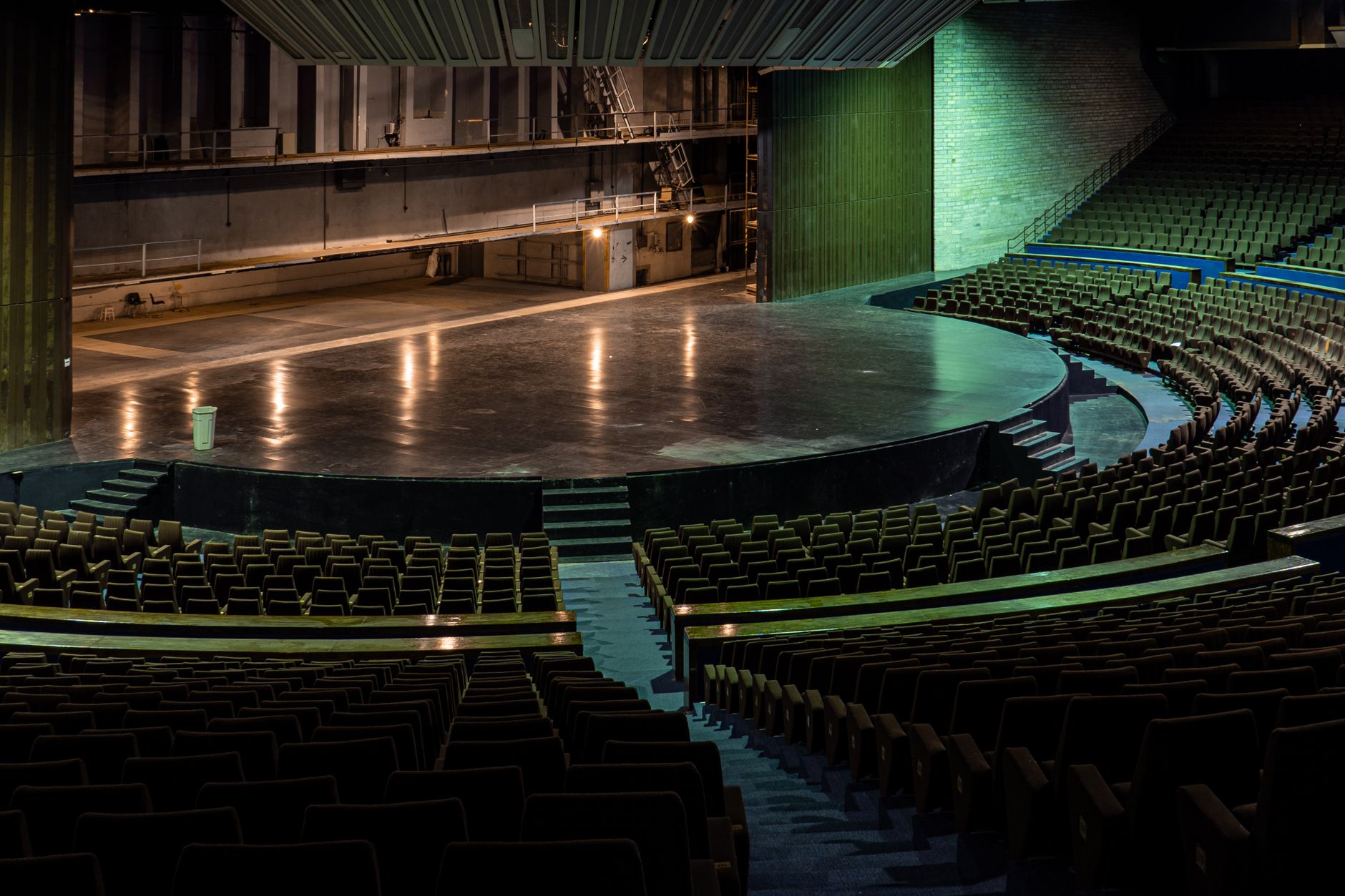
A large arena is a venue in the commercial sense and an obstacle in the acoustic sense. It exists to put many people within sight of one stage, and nothing about that goal is friendly to sound. The hard shells that make big rooms cheap to build and easy to clean are the same surfaces that keep the show ringing around the space long after the note has stopped.
Everything in modern large-format live audio, the design of the loudspeaker systems, the way they are aimed, the existence of a separate monitor world, the whole soundcheck ritual, is a response to that problem. The engineers are not trying to make an arena sound like a studio. They are trying to stop the room from adding a second, blurrier performance on top of the first one.
A Big Hard Room Is Working Against the Show
Sound in an enclosed space arrives twice: once directly from the loudspeaker, then repeatedly as reflections off walls, floor, ceiling, and the underside of overhangs. In a small room with soft finishes, the reflections decay fast enough to read as warmth. In a large room finished in concrete, steel, and glass, they persist long enough to arrive as separate, smeared copies of the music.
The audible consequences are consistent. Consonants lose definition, so vocals become hard to follow even when they are loud. Low frequencies build up in some parts of the room and cancel in others, because long wavelengths interact strongly with a room’s dimensions. Fast material suffers worst, since each note is still audible as reflected energy while the next one is being played.
An audience helps. Bodies absorb sound, and a full house is measurably less reflective than an empty one, which is exactly why a system tuned in a bare room needs revisiting once people are in it. Empty seats in the upper tiers are an acoustic problem as well as a financial one.
Front of House and Monitors Are Two Different Jobs
Live sound at scale splits into two roles with different goals, and conflating them is the most common misunderstanding about how a concert is mixed.
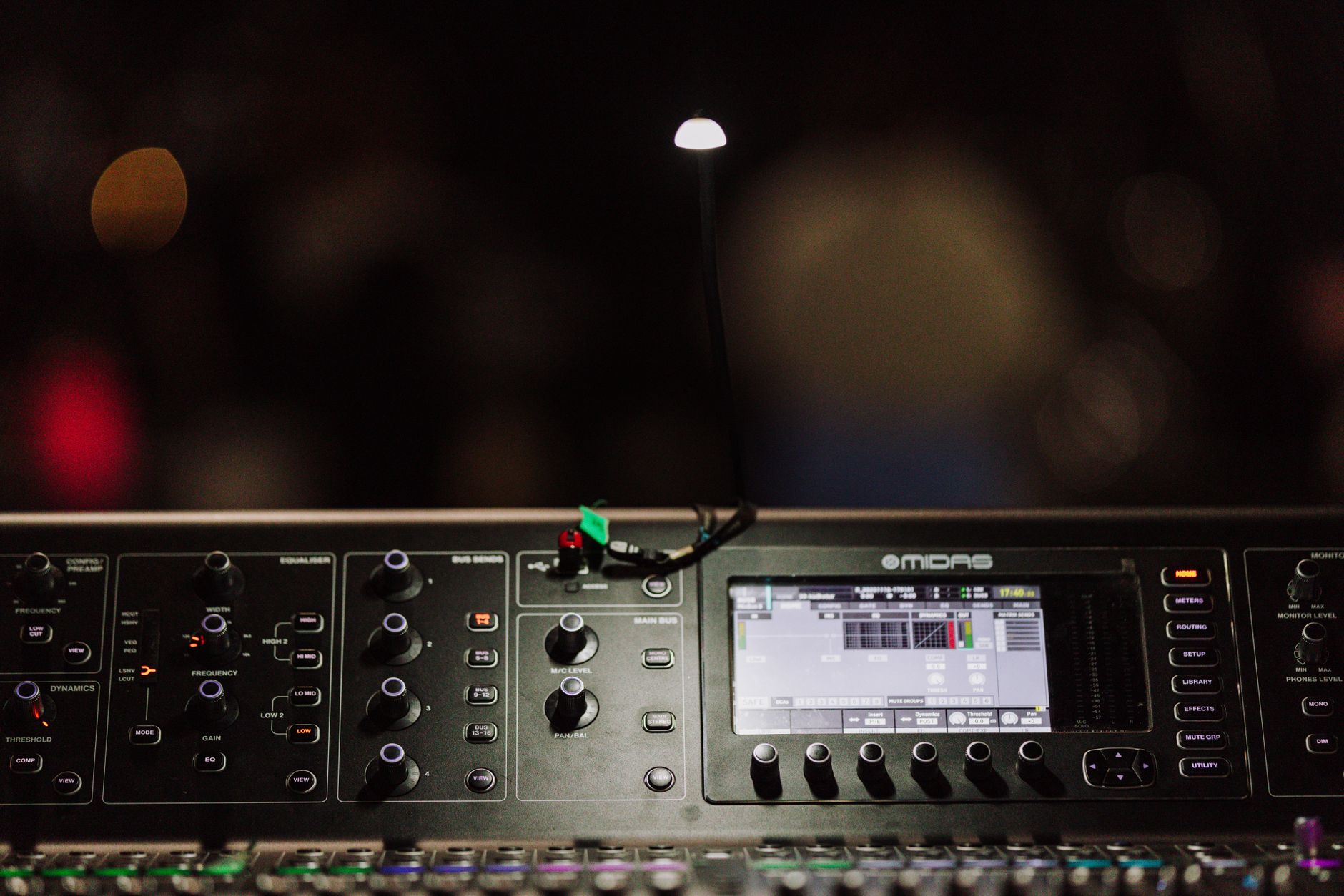
The front-of-house engineer works from a console out in the room, usually well back on the floor, and builds the mix the audience hears. That job is musical and architectural at once: balance the instruments, control the room’s contribution, keep the vocal intelligible, and manage dynamics across a set that moves between a full-band wall of sound and a single voice with one instrument.
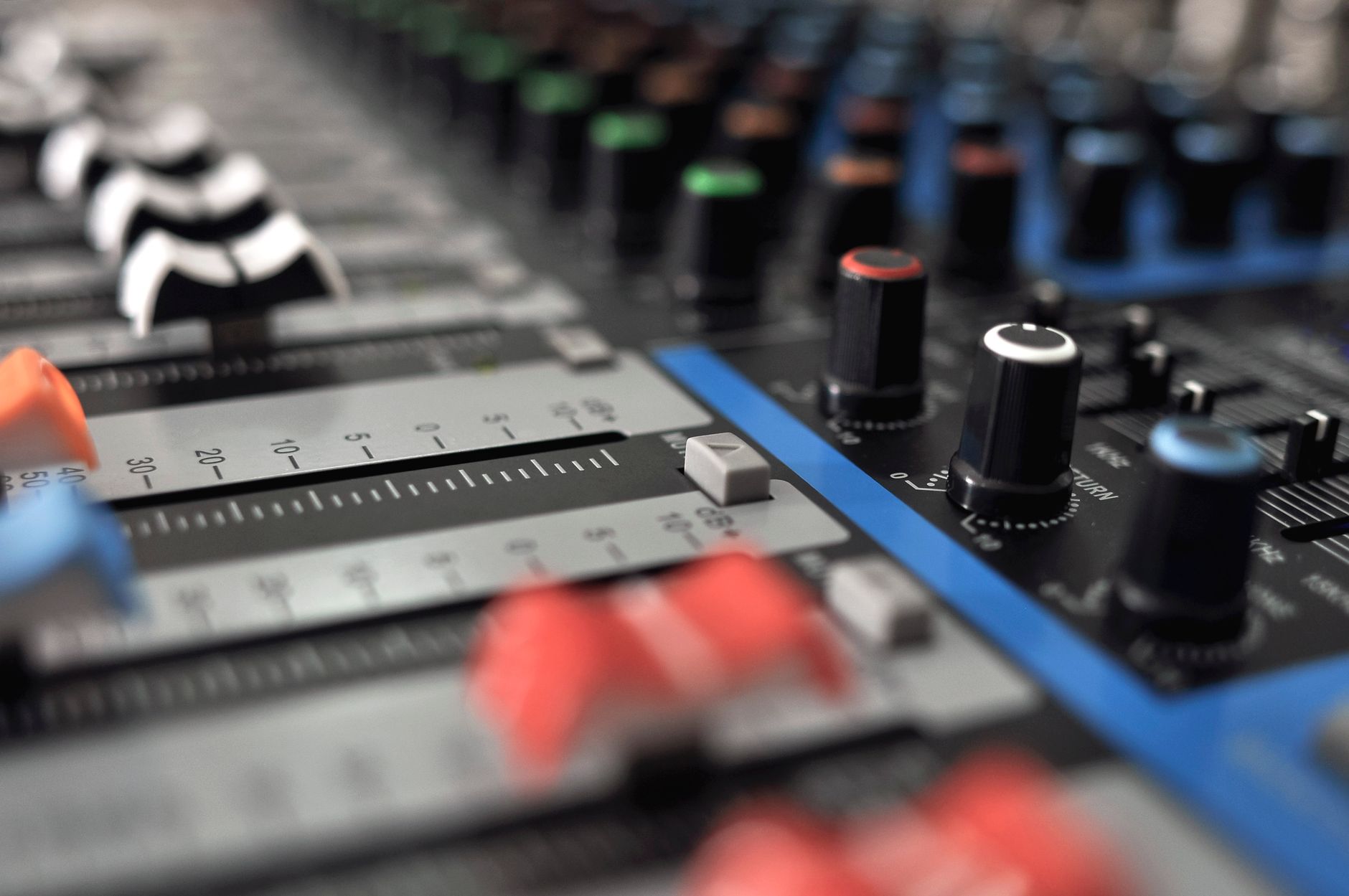
The monitor engineer builds something entirely different: a separate mix, or rather several separate mixes, for the performers on stage. Each musician needs a version of the show that lets them play, and those versions have little to do with what sounds good in the seats. A drummer may want mostly bass and a click. A singer may want their own voice, a pitch reference, and very little else. In-ear monitoring made this both easier and more exposed, because it gives each performer an isolated, repeatable mix while removing the room cues players used to rely on to feel connected to the show.
The two engineers are solving different problems with the same source material, and a performance can be excellent in the seats and miserable on stage, or the reverse.
What a Line Array Is Designed to Solve
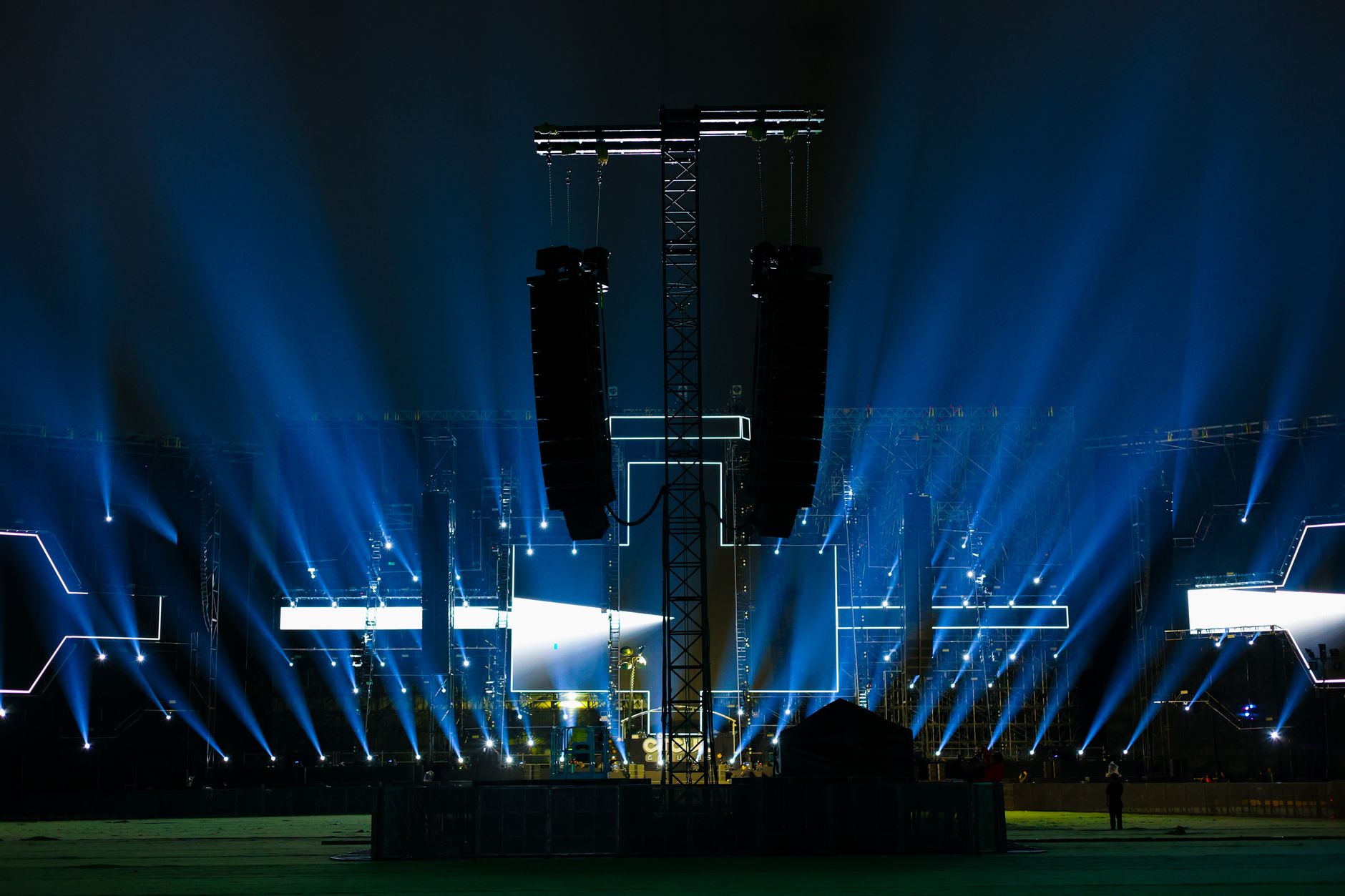
The tall vertical hangs of loudspeakers either side of a large stage are line arrays, and their purpose is coverage rather than volume.
The underlying problem is geometry. The nearest listener may be a few metres from the stage and the farthest a hundred or more, and sound loses energy with distance. A single loudspeaker loud enough for the back row would be punishing at the front. A line array addresses this by behaving as one tall coherent source rather than a stack of independent boxes, with individual elements angled so the ones at the top of the hang project further and the ones at the bottom cover the nearer seats.
That is why the hang is curved, tighter at the top and splayed at the bottom. The design intent is a roughly even level and tonal balance from front to back, and a controlled vertical pattern that puts energy on the audience rather than into the ceiling and rear wall, where it would only come back as reflection. Systems get designed against the specific room in advance, because the array that covers one seating bowl correctly will misfire in a differently shaped one. Delay speakers further back and separate arrays for side and upper seating exist for the same reason: some parts of a bowl cannot be reached cleanly from the main hangs at all.
The Mix You Hear Depends On Where You Sit
There is no single arena mix. There is the mix at the engineer’s position, and then there is what the room does to it everywhere else.
The engineer stands in one place, and that place is chosen because it is representative rather than because it is best. Move away from it and things change: seats near a side wall get a strong early reflection the engineer never hears, seats under a deep overhang lose high frequencies and gain a boxy character, seats close to the stage may hear more raw sound from the stage itself than from the system, and seats far to one side receive noticeably more of the nearer array than the other.
Low frequencies vary most, since they interact with the room’s dimensions rather than being absorbed by soft surfaces. Two seats a short distance apart can genuinely differ in how much bass they receive. This is also why arguments about whether a show sounded good are often unresolvable: both parties are describing what they heard accurately, and they heard different events.
Soundcheck, and the Version That Happens Without the Band
Soundcheck is not the band running songs for fun. It is a sequence of technical confirmations: that every input arrives at both consoles, that stage levels work for the performers, that the system has been tuned to this room, and that the show’s cues can be executed.
The system tuning happens before the band appears, with measurement rather than opinion. Engineers play known material through the rig and measure how it arrives at various positions, then adjust aiming, delay times between array elements and any secondary speakers, and equalisation, so that the system’s response is as consistent as the building permits.
The workflow that changed touring is the virtual soundcheck. Every input from a previous performance is recorded multi-track, and the recording can then be played back into the console as if the band were on stage. That lets the engineers refine a mix in the actual room with the actual rig, in detail, without asking the performers to stand around. On a long routing where the crew arrives hours before the band, it converts dead time into mixing time, and it also gives a new engineer a way to learn a show without an audience present.
The Mix Nobody Notices Is the Good One
A well-mixed arena show is defined by absence: no ringing, no lost vocal line, no bass that turns to mud in the back half, no moment where a quiet song becomes inaudible because the room is louder than the band. All of that takes system design against a specific building, two engineers solving unrelated problems, and a tuning process that treats the room as an instrument being corrected rather than a neutral container. When it works, the audience believes the room simply sounds good, which is the point.