A 2.3 Billion Dollar Bet: What the Sphere Actually Changed About Live Music
U2's residency numbers and the Sphere's real construction costs show how the Las Vegas venue rewired live music economics, and where the model may not scale.

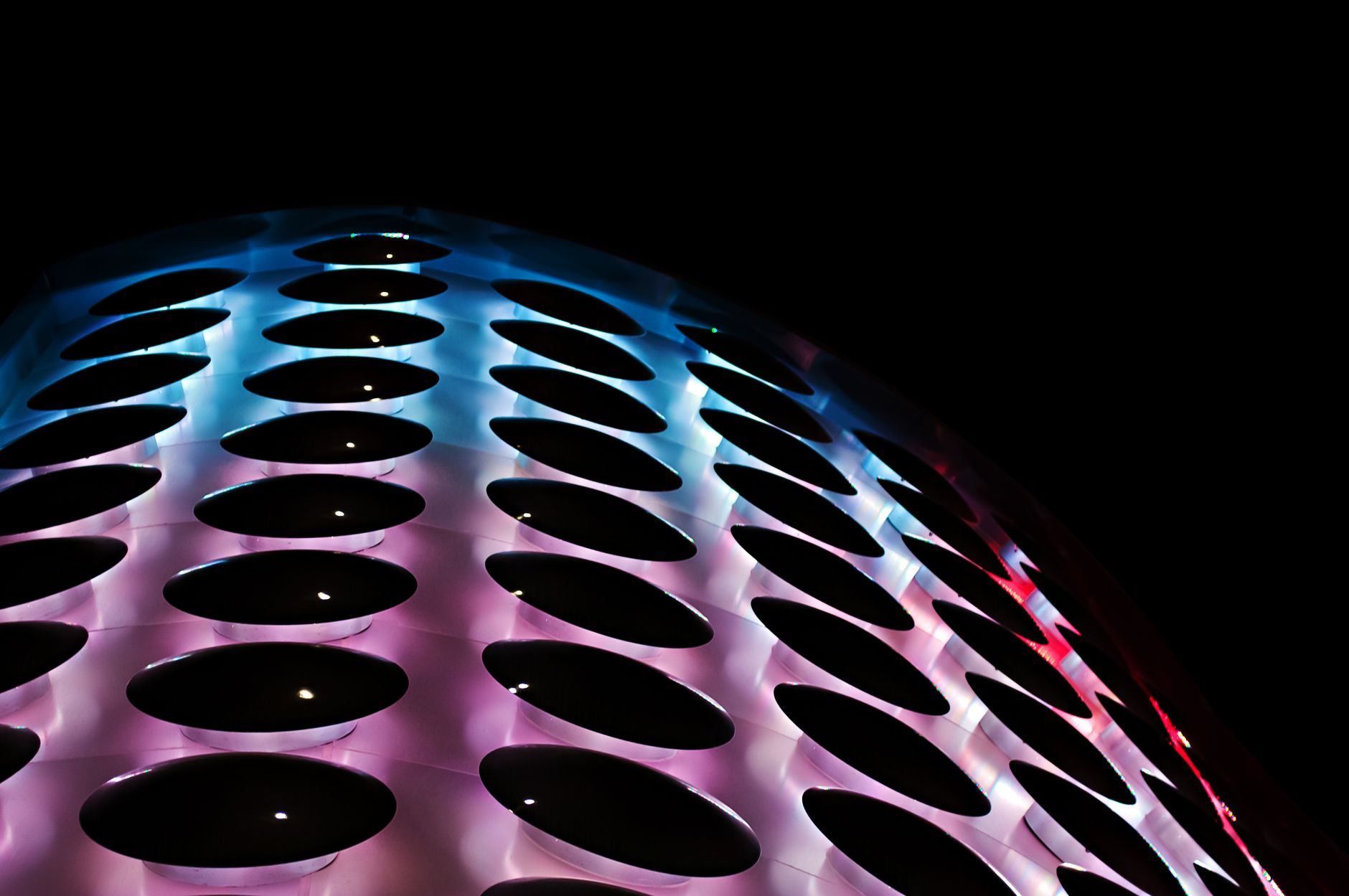
When plans for the Sphere were first floated, the projected construction cost sat at $1.2 billion. By the time the venue actually opened in Las Vegas, that number had grown to $2.3 billion, making it the most expensive music venue ever built. Officials attributed the overruns to the sheer complexity of the build and to complications from the pandemic, which hit during construction.
A venue that expensive needs a way to earn its cost back, and the answer the Sphere’s operators landed on was not a normal touring calendar. It was residency, one act or one piece of immersive programming locked into the room for weeks or months at a time, at ticket prices roughly double what a comparable arena show charges. U2’s opening residency became the test case for whether that model actually works.
The numbers behind U2’s opening run
U2’s residency at the Sphere grossed $244.5 million across 40 performances, drawing 663,000 total attendees and selling 661,456 tickets. That works out to an average gross of more than $6 million per show, a figure that puts the run among the most lucrative live music engagements in recent history for a single venue booking.
Average ticket prices for major Sphere residencies have run in the $200 to $400 range, roughly double the cost of a comparable arena show elsewhere. That premium is not incidental. It is the mechanism by which the venue amortizes a $2.3 billion construction cost that no ordinary touring economics, built around one or two nights per city, could ever recover.
Why residency, and not touring, was the point
A touring show plays a city for one or two nights and moves on, spreading its production cost across dozens of markets but never fully using any single venue’s capacity. The Sphere flips that model: the venue is effectively a fixed, unmovable piece of production infrastructure, built with a wraparound interior LED surface and immersive audio that would be impossible to truck between cities, so the artist comes to the room instead of the room’s technology going on tour.
That only pencils out financially if enough people are willing to travel to Las Vegas specifically to see the show, repeatedly, across a run long enough to justify the fixed cost of running the building. U2’s numbers suggest that audience exists for the right act, but the model has not yet been tested at scale across acts without U2’s specific decades-deep global fanbase and Las Vegas’s existing tourism infrastructure feeding it a constant stream of visitors already in town.
The economics also depend on a longer commitment from the artist than a normal tour stop requires. Forty shows in one building means an act effectively relocates for weeks, giving up the variety and novelty of playing different cities in exchange for not having to load in and load out new production every night, a trade that only makes sense once the fixed production cost is large enough that touring it city to city would be more expensive than building it once and staying put.
The venue’s own numbers now outrun any single residency
By 2025, the Sphere as a venue, combining residency programming and immersive film content, generated $379 million on 1.7 million tickets sold, making it the highest-grossing arena globally that year according to Pollstar’s venue rankings. That figure includes more than concert residencies; the venue also runs original immersive film programming between artist bookings, a second revenue stream that keeps the building generating income during gaps between major residencies.
That combination, premium-priced residencies plus a standing slate of proprietary immersive content, is what has turned what looked like an extravagant, possibly reckless $2.3 billion bet into a venue that operators now describe as a turnaround success rather than a cautionary tale. The gap between a single artist’s residency gross and the venue’s full-year number also shows how much of the Sphere’s economics depend on keeping the calendar full rather than any one booking carrying the building alone.
Whether the model actually scales
The Sphere’s operators are testing that question directly, with a second Sphere venue now in development for Abu Dhabi and a third planned for Maryland, explicitly positioned as a blueprint extending the Las Vegas model into new markets. Whether those venues replicate the Las Vegas numbers depends on factors the Nevada location does not have to solve: Las Vegas already delivers tens of millions of tourist visits a year to a compact strip where a Sphere residency competes for a night out against other spectacle-driven shows, not against a city’s entire cultural calendar.
That tourism density is arguably as important to the Sphere’s economics as the technology inside the building. A Sphere in a market without Las Vegas’s built-in visitor volume has to generate its own audience pull from a local and regional base rather than skimming off tourists who were already coming to town for other reasons, which is a materially different and harder problem, and one the Abu Dhabi and Maryland projects will answer with real box office numbers rather than projections.
What it changed for everyone else
Even acts that will never play the Sphere have felt its effect on expectations. Immersive visuals, wraparound screens, and residency-style extended runs in a single market have become reference points that other tours and other venues are now measured against, pushing production budgets and audience expectations upward across the touring business generally. The Sphere did not just prove one venue could work. It reset what counts as a spectacle in live music, which is a more durable and more expensive legacy than any single residency’s box office number.